
Homemade stir fry sauce
If you like easy weeknight dinners that don’t require a special trip to the store, this stir fry sauce is one to keep in your back pocket.
It’s quick to make, uses simple pantry ingredients, and works with just about any vegetables, protein, or noodles you already have on hand.
If I have a handful of different sauces, some kind of starch, and a pile of vegetables, stir fry is almost always an option at our house.
This little recipe has saved me more times than I can count from:
an extra grocery run
and a sink full of dishes
I started making this years ago and followed it pretty closely at first.
Now I treat it more like a framework. I swap things in and out depending on what’s around, and it almost always turns out well — which is exactly what I want on a busy weeknight.
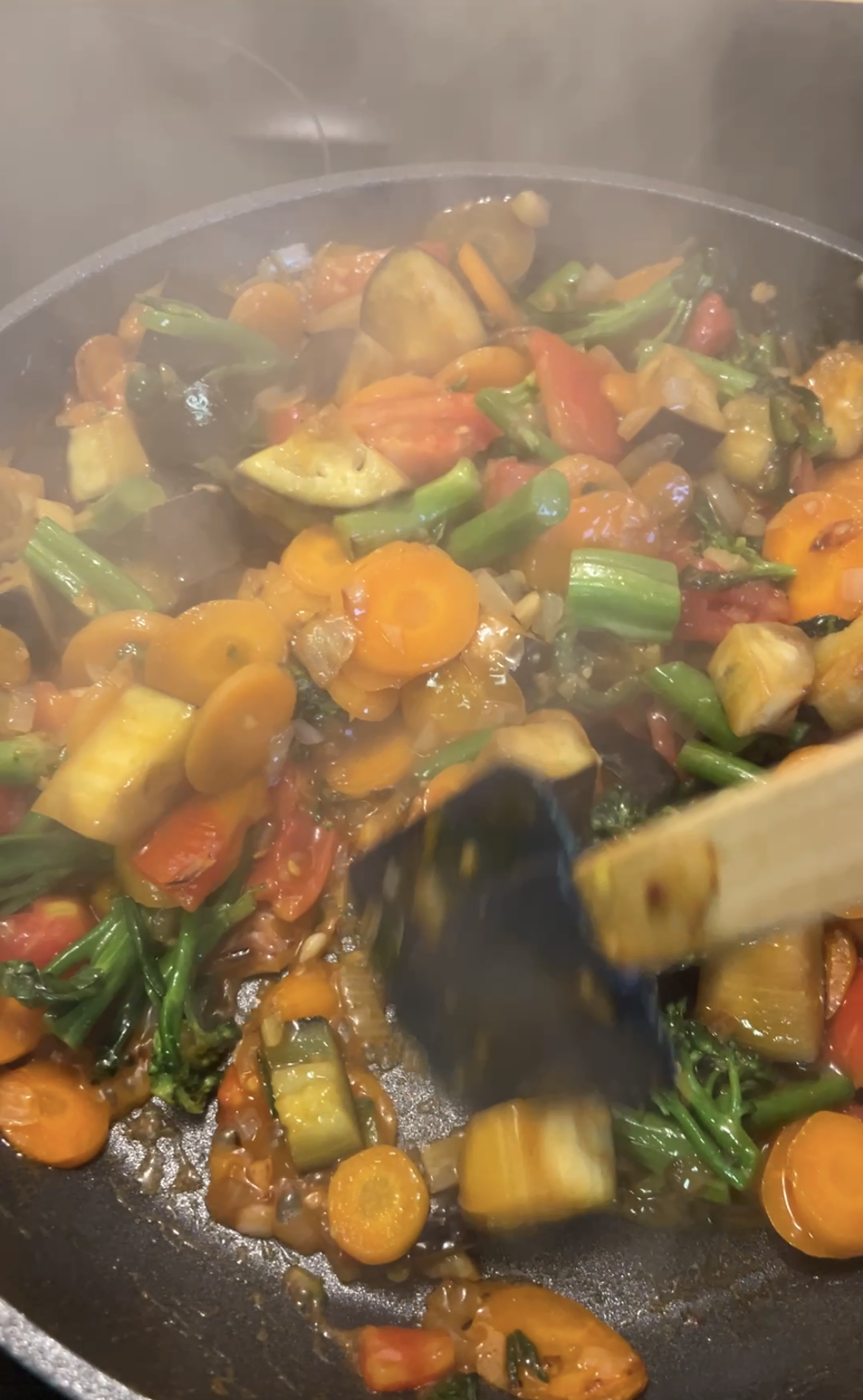
Base stir fry sauce recipe
Yield: about 1 cup
Time: 2 minutes (plus stir-fry time)
Ingredients
1/2 cup water
1/3 cup soy sauce or tamari
1 Tbsp sugar or honey
1 Tbsp rice vinegar, white vinegar, or lime juice
2 tsp sesame oil
1 Tbsp arrowroot powder or cornstarch
minced garlic and ginger, to taste
Directions
Whisk all of the ingredients together in a bowl or measuring cup, making sure the starch is fully dissolved.
In a separate pan or wok, stir fry your vegetables (and protein, if using) until they’re nearly cooked.
Pour the sauce into the pan and cook for 1–2 minutes, stirring, until thickened and glossy.
Storage notes
This sauce is best made fresh.
Because it relies on starch to thicken, it doesn’t store or reheat particularly well once mixed. The good news is that it only takes a couple of minutes to whisk together, so it’s easy to make right when you need it.
How to substitute and build a balanced sauce
Stir fry sauce is really just a balance of the follwing:
something salty
something sweet
something acidic
a little fat
and a starch to thicken it
Once you get a feel for the basic components, you’re no longer tied to a single “recipe.”
You can look at what you already have in your cupboards and build a sauce from there — substitutions encouraged.
Maybe you’re out of rice vinegar but have lemon.
Maybe you’re low on soy sauce but have miso. (one time I even used pho broth and it was amazing)
Maybe you want to use honey instead of sugar.
As long as you’re hitting most of these elements, your sauce will work.
Over time, you’ll start to notice what you like best (saltier, sweeter, tangier, richer) and you can adjust from there.
That’s what makes stir fry such a reliable dinner option: once you get a feel for the balance, you can make it almost anytime.
How to make this sauce your own
This recipe started as something I followed pretty closely. Now I treat it more like a starting point.
Depending on what’s in the fridge or pantry, I swap things in and adjust as I go. It’s very forgiving, which makes it ideal for busy weeknights.
Here are some of my favorite variations:
Sriracha or chili paste for heat
Fish sauce or oyster sauce for extra savoriness
Peanut butter for richness
Fresh citrus, like orange or extra lime juice
Miso or broth in place of some of the water or soy sauce
Other sauces I’m curious about experimenting with
Before I pour the sauce into the pan, I always taste it and make small adjustments.
If it tastes balanced to you, it will work in the stir fry.
Seasonal vegetables that work well in stir fry
One of my favorite things about stir fry is how well it adapts to what’s in season.
Here are some combinations that work especially well throughout the year:
Spring
Carrots
Radishes, turnips
Green onions, green garlic
Bok choy
Peas
Arugula or spicy greens
Light sauces with a little citrus work especially well here.
Summer
Carrots
Tomatoes
Zucchini
Kale
Corn
Eggplant
Green beans
Garlic, onions
Fall
Carrots
Peppers
Tomatoes
Cabbage
Edamame
Onion
Kale
Kohlrabi
Winter
Carrots
Cabbage
Kohlrabi
Winter radish
Onion
The nice thing about stir fry is that you don’t have to wait for “the right” ingredients.
If you have vegetables, something salty, something sweet, something acidic, and a pan, you’re most of the way there.
That’s what makes this sauce such a helpful tool: it turns whatever season you’re in (and whatever’s in your fridge) into a real, satisfying meal.
