
Garlic and onion substitutions for seasonal cooking
If you’ve ever pulled up the perfect recipe, whipped out your cutting board to start chopping, only to realize you don’t have a yellow onion (or maybe they aren’t even in season yet) — this guide’s for you.
Most recipes are written as if the same ingredients are always available. But when you’re cooking with local, seasonal produce, it changes throughout the year.
That’s especially true for onions and garlic, which show up in almost every savory recipe. The good news: this whole family of vegetables — called alliums — is remarkably flexible. Once you understand what role an onion is playing in a dish, swapping between them is simple.
This guide walks through the alliums we grow here at Sweet Season Farm, when you’ll find them in the online store, and exactly how to swap them in your cooking.
The simple rule: think role, not name
When a recipe calls for an onion, it’s usually doing one of two things:
Building base flavor (soups, stir fries, sautés)
Adding bite without overdoing it when eaten raw (salads, dressings, salsas)
Once you know which role your recipe needs, choosing a seasonal swap gets much easier.
Swaps by use
For cooking bases
Soups, sautés, stir fries, roasted dishes
If your recipe calls for a yellow or red onion as the foundation of a cooked dish, use:
The white part of green onions (scallions)
Spring onions
Sweet onions — slightly milder and higher in water content, but they cook the same way
One thing to keep in mind: the green tops of green onions don’t hold up to long cooking. Save them for a garnish or stir them in at the very end.
For raw and fresh use
Salads, dressings, salsas, grain bowls
If a recipe calls for red or white onion used raw, you have several good options:
Green onions (both the white and green parts)
Spring onions
Sweet onions
Garlic scapes — especially nice in dressings
Spring onions and sweet onions are particularly great for fresh use — often even better than storage onions in early-season dishes because they’re so mild and juicy.
For leeks
If a recipe calls for leeks, reach for:
The white and light green parts of green onions or spring onions
Garlic scapes
Chives
Green onions and chives cook much faster than leeks, so add them toward the end rather than at the beginning of cooking.
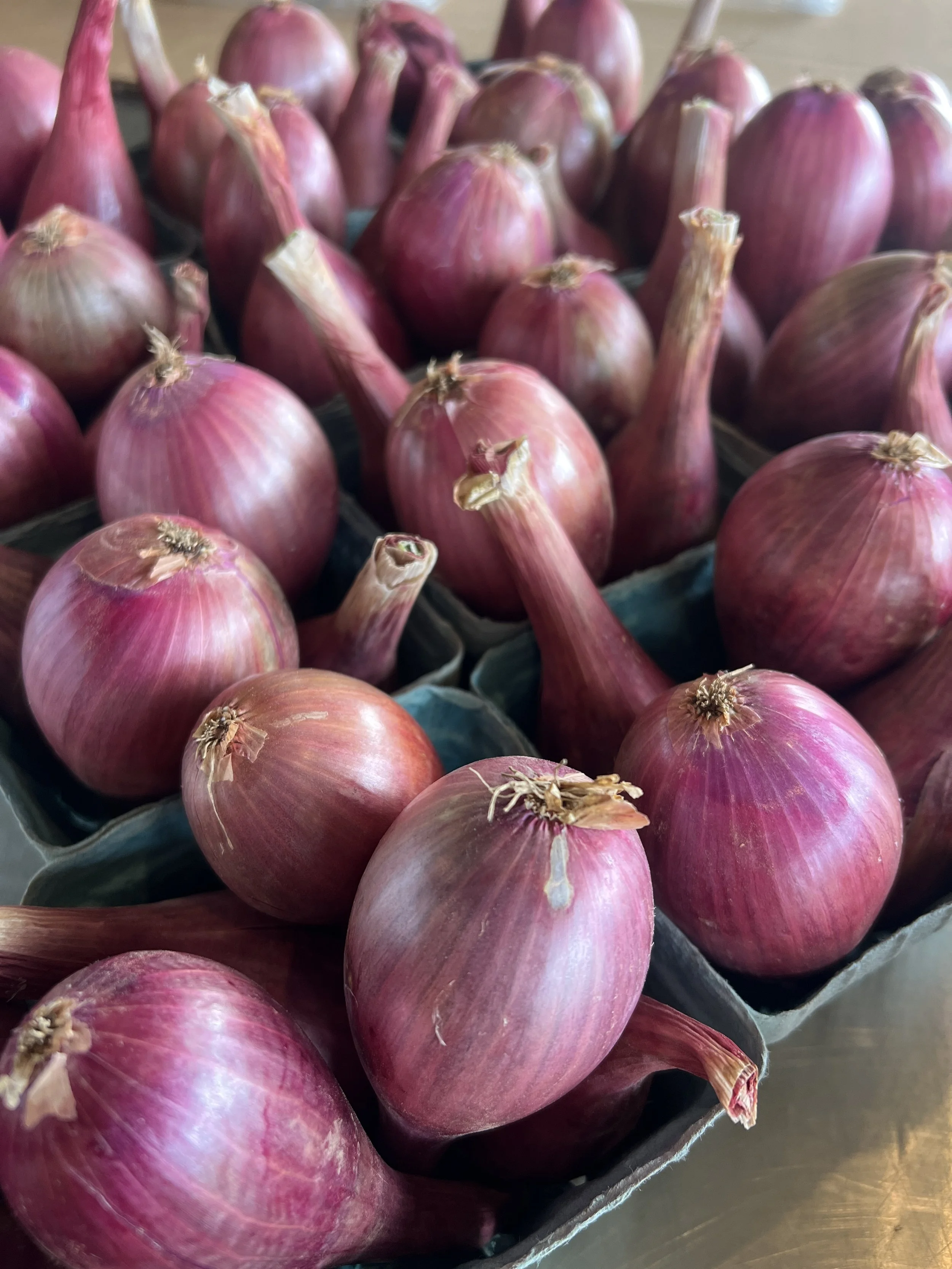
Shallots are our go-to for vinaigrettes, marinades, and salsas. They have a mild garlicky edge too, so when a recipe calls for both garlic and onion, a shallot often does both jobs at once.
For shallots
Shallots are mild and concentrated. They’re popular in dressings because they’re gentle when eaten raw and don’t add too much water and body to the dish. If you don’t have them, use:
The white part of green onions for cooked dishes
The white and green parts of green onions for fresh use
Spring onions or sweet onions
Shallots are drier than most of these substitutes, so spring onions and sweet onions may need a little extra time in the pan to cook down.
For garlic
If a recipe calls for garlic cloves and you don’t have any, try:
Garlic scapes (available in June) — milder than cloves, so use more
Fresh garlic (early summer, before it’s cured)
Garlic is back in our online store in cured form starting in late summer.
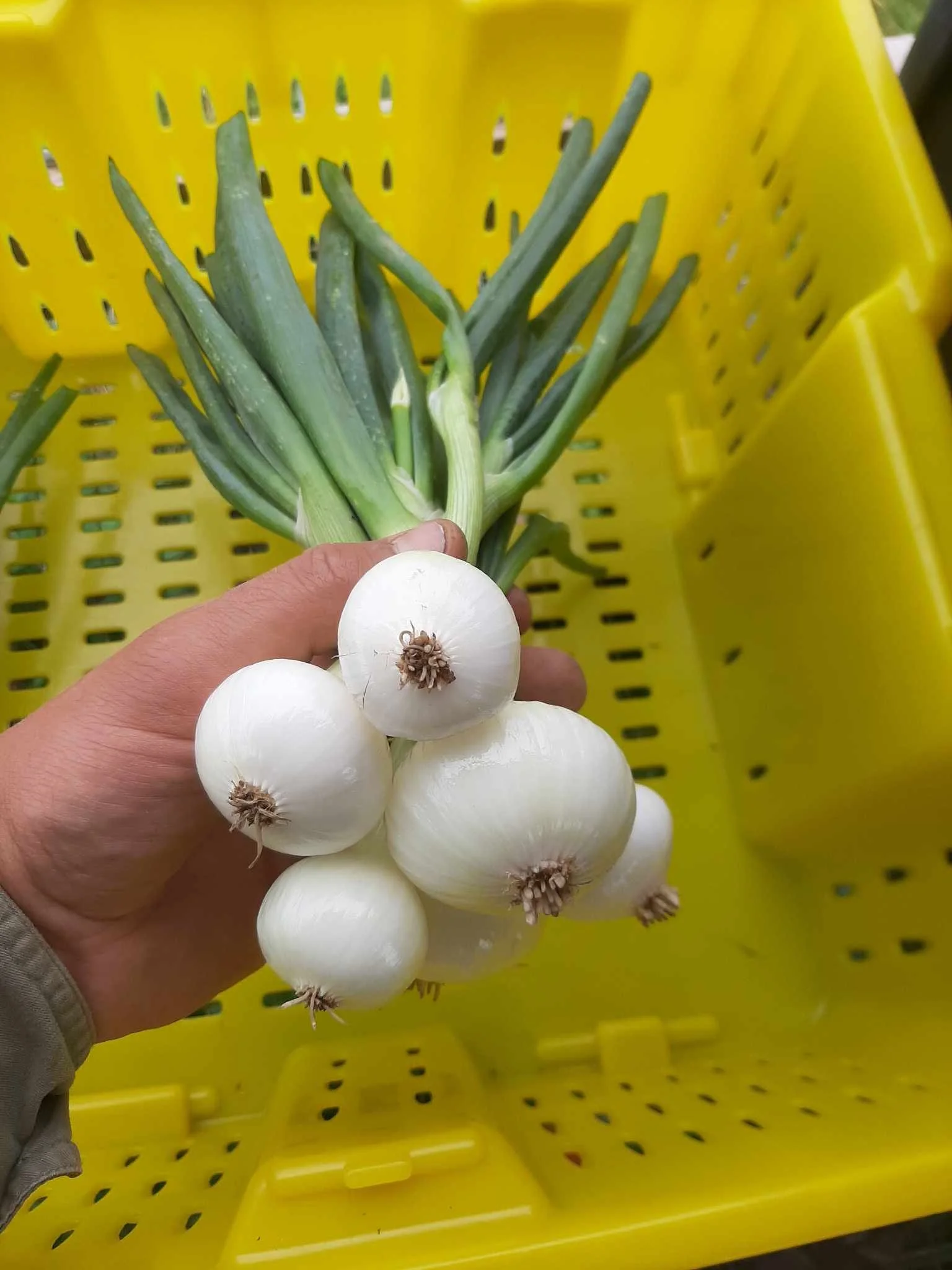
Fresh spring onions in June
What to expect from each allium, by season
Spring (May)
Green onions (also called scallions)
These are the first alliums of the season and one of our most reliable spring crops. The white base has a mild punch that holds up to cooking; the green tops are fresh and grassy and best used raw or stirred in at the last minute. Green onions are extremely versatile — they work in everything from stir fries to salads to dressings.
Chives
Delicate and grassy, chives are a perennial that pop up early in the season. They’re best used as a finishing herb — great on eggs, potatoes, or scattered over a salad. They don’t hold up to heat, so always add them after cooking.
Early summer (June–July)
Spring onions
Spring onions are essentially young onions harvested before they’ve had time to form a dry papery skin. They’re bigger than green onions, with a rounder bulb and a slightly stronger flavor. Slice them thin for fresh use, or cook them lightly. They’re wonderful grilled or roasted whole.
Garlic scapes
Garlic scapes are the curly green stems that grow up from hardneck garlic plants. We harvest them in June to help the garlic bulbs develop underground. The flavor is milder than a garlic clove — garlicky but fresh. You can mince them and use them just like garlic in any recipe, just plan to use a bit more. They’re also great stirred into pasta, pesto, or stir fry.
Fresh garlic
For a short window in early summer, you’ll find fresh (uncured) garlic in the shop. It’s slightly milder than the cured garlic you’re used to, with a papery skin that hasn’t fully set yet. Store it in a container in the fridge and use it within a week.
Sweet onions
Sweet onions show up before storage onions and are noticeably milder — higher in sugar and water, which makes them great for fresh eating. They’re wonderful raw in salads or dressings, and still very good cooked. Use them fairly quickly since they don’t store as long as cured onions.
Fall and winter (August–December and beyond)
Cured garlic
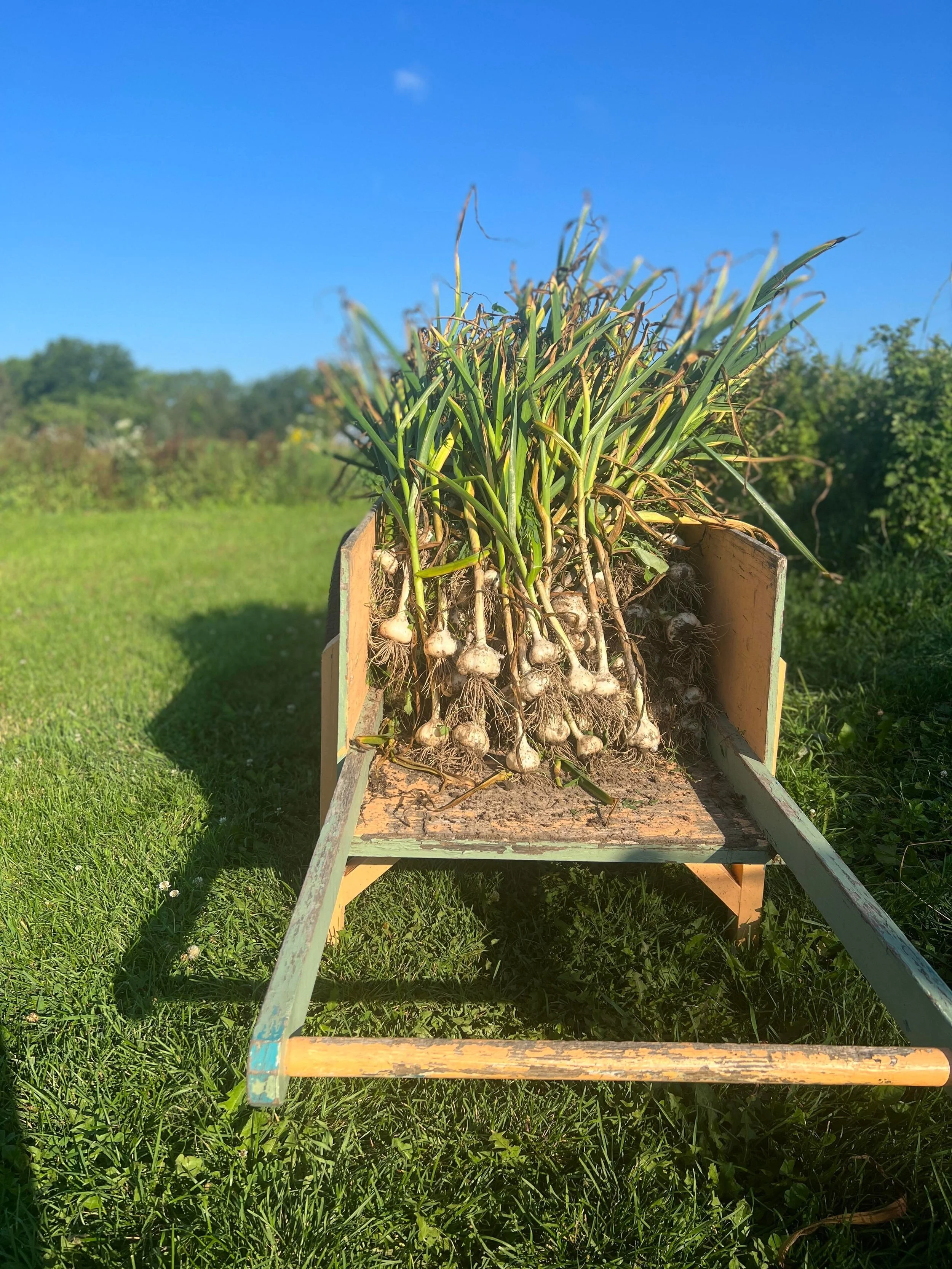
Our garlic is ready in late summer, after it’s been harvested and dried. Here in Iowa, most garlic is hardneck, which means it has fewer cloves and a firm stalk in the center. Hardneck garlic is easier to peel than softneck and is well-suited to long storage. A head kept in a cool, dry spot can last well into winter.
Storage onions
Yellow onions are your workhorse for cooking: great for soups, sautés, and anything that cooks long and low. Red and white onions are better for fresh use: salads, salsas, dressings. We sell onions by the head in the online shop, so it’s easy to grab just what you need.
Leeks
Leeks have a mild, almost sweet onion flavor and are especially good in soups, pastas, and roasted dishes. They store well and are a great option later in the season when other alliums are less available. Use the white and light green parts; the dark green tops are tougher and better for stock.
Shallots
Shallots have a more concentrated flavor than onions: slightly sweet, a little complex. They store extremely well under the right conditions and can last well into winter. We use them a lot in dressings, where a little goes a long way.
A note on cooking alliums with the seasons
Getting comfortable with allium swaps is one of the most practical skills you can build as someone cooking with local produce. It means you’re never stuck because a recipe calls for something you don’t have. Now you can just reach for what’s in season and adjust from there.
Most recipes are starting points, not rules. Once you know what role an ingredient is playing, you can usually find something in the farm bag that will do the job just as well, sometimes better.
