
Double dip spring rolls
Ethan and I lived in Saigon, Vietnam for a year, and one of our favorite food memories from that time was completely accidental. We ordered what we thought were spring rolls at a restaurant and were presented with a pile of rice paper, a container of water, and a spread of fillings. Turns out we'd ordered the deconstructed version.
We figured it out. The rolls were messy. We had an absolute blast.
We've been making spring rolls at home ever since, and they're one of our favorite ways to use up whatever's looking great that week. There's no wrong way to fill them, which makes them perfect for summer when the farm is suddenly bursting with good things.
Spring rolls as a seasonal vehicle
This isn't really a recipe. It's more of a method and a set of suggestions. The fillings change depending on what's around. In late June, carrots, cucumbers, lettuce, green onions, cilantro, mint, and thai basil are all coming in strong. We recommend a combination of any of the above! Add shrimp, pork, or tofu if you want something more substantial, or keep it simple and let the vegetables shine.
The double dip is our thing. We make both sauces and let everyone mix and match. Some days the bright, funky lime hit of nuoc cham is exactly right. Other days it's all about the peanut sauce. You really only need one, but having both is extra fun.
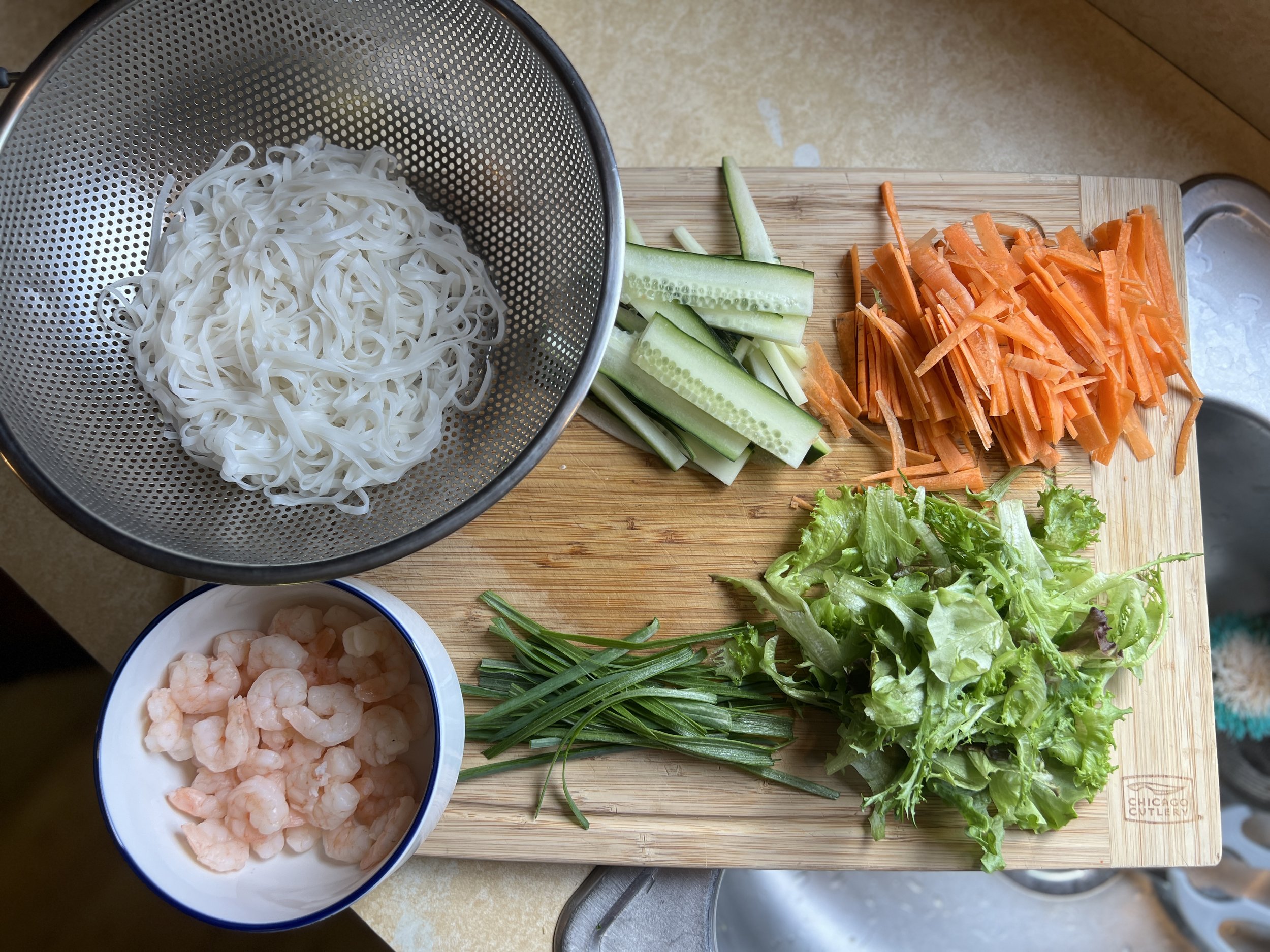
The mise en place approach works perfectly here. Cut veggies into long, thin strips, prep herbs, cook your noodles and protein ahead, then set it all out and let everyone build their own.
How to assemble spring rolls
Start by prepping everything before you touch the rice paper. Cook your rice noodles and any protein, then prep your vegetables: cut everything into long, thin, flat pieces so they roll up neatly. Having it all ready to go makes the process much smoother.
Fill a wide, shallow dish with warm water. Submerge a sheet of rice paper for a few seconds until just pliable. It will continue to soften as you work, so don't wait until it's fully soft. Lay it flat, add fillings to the lower third, fold in the sides, and roll up firmly. Follow your package instructions for more guidance. Every brand behaves a little differently, so give yourself a roll or two to get a feel for it.
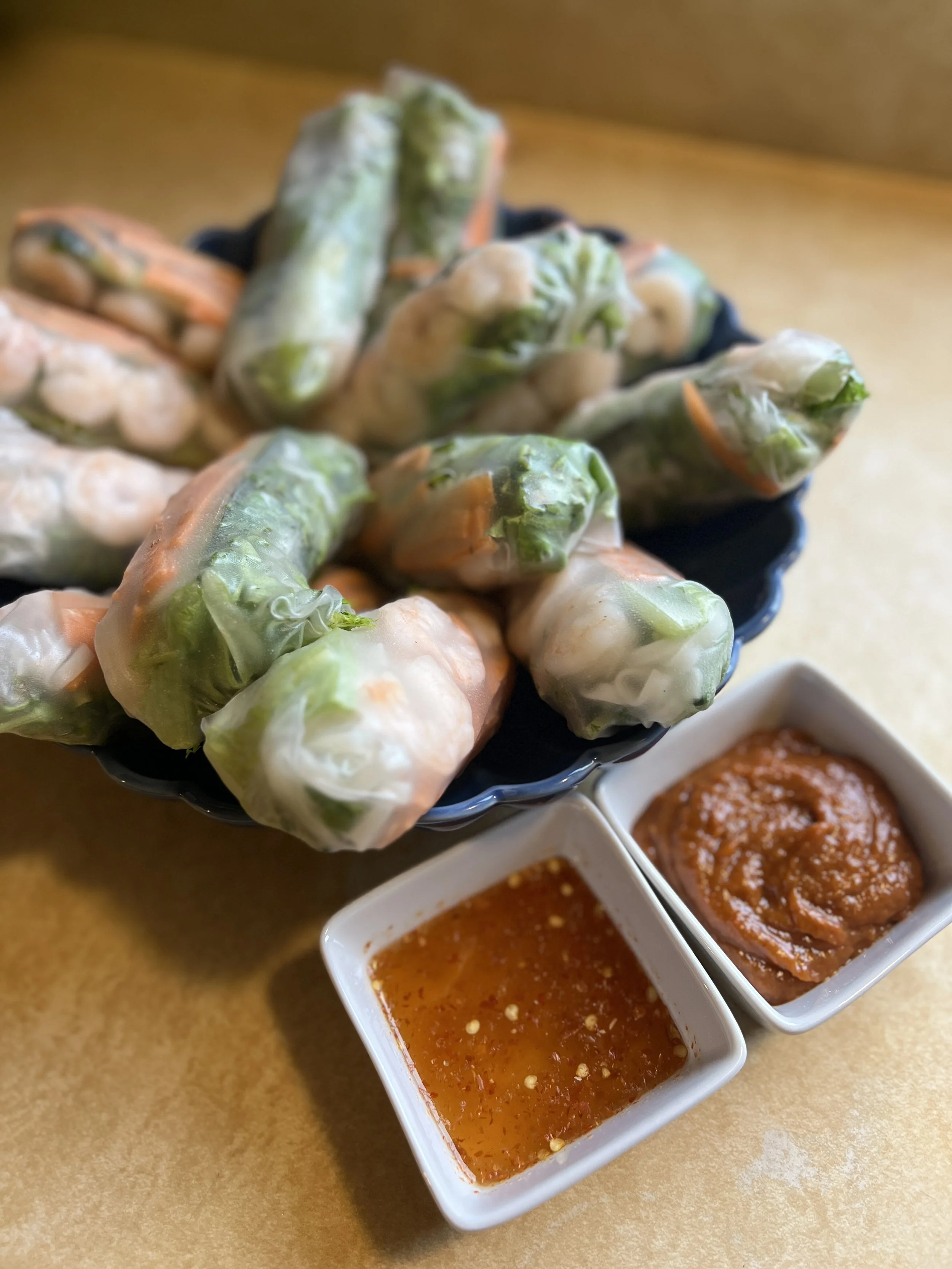
Nước Chấm (Vietnamese seasoned fish sauce)
Nước chấm is a Vietnamese dipping sauce served alongside all kinds of dishes. Fresh, bright, a little funky, and just the right amount of kick. It comes together in about two minutes, and the mason jar method means zero extra dishes.
Ingredients:
4 tbsp water
2 tbsp sugar
2 tbsp freshly squeezed lime or lemon juice
2 tbsp fish sauce
1/2 clove garlic, minced
1/2 Thai chili, minced, or a pinch of red pepper flakes
Directions:
Combine all ingredients in a mason jar. Seal and shake until the sugar dissolves.
If using dried pepper flakes, let the mixture sit for at least 1 hour before serving so the flakes soften and the flavor develops.
Taste and adjust. A little more lime for brightness, a little more fish sauce for depth.
Bangkok Peanut Sauce
Rich, creamy, and a little spicy. This one is a crowd-pleaser. The recipe makes about 2 cups, which is intentional. You need enough volume in the pot to keep the sauce from scorching. Natural peanut butter works best here. If you're using a sweetened brand, skip the added sugar or the sauce will tip too sweet.
Dial in the Thai red curry paste to your taste. Start with a little less if your household runs mild.
Ingredients:
1/2 cup peanut butter (smooth or chunky both work)
2 oz Thai red curry paste
3/4 cup coconut milk
1/4 cup white sugar (skip if using sweetened peanut butter)
1 tbsp fish sauce (or a pinch of salt)
1/4 cup water
Directions:
Combine all ingredients in a small saucepan over medium heat.
Whisk constantly until everything is smooth and well combined, about 5 minutes, until the sauce just begins to simmer.
Continue cooking for 2 more minutes, stirring constantly to prevent sticking, until the sauce thickens slightly and bubbles more vigorously.
Remove from heat. Store in the fridge for up to 5 days. The oil may separate and float to the top. That's normal. Give it a stir before serving.
