
How to massage kale (the 2-minute tip that’ll make you actually like it)
If you've ever taken a bite of chewy, dry raw kale and low-key kind of wished you hadn't, this post is for you.

Massaging kale sounds really silly. But it truly transforms the leaf, and not in a woo-woo way. In this post, I'm breaking down (pun intended) the basics of why massaging kale will make you actually want to eat kale and get more out of it when you do.
It's the difference between eating kale just to force yourself to eat something healthy and actually craving it and wanting to use it in more recipes.
This technique fixes all that in just a few minutes, makes it taste better, and boosts the nutrition your body can actually absorb.
Here's everything you need to know to do it right.
When to massage kale
Massaging is a technique specifically for raw kale, like when you're making a kale salad. It makes the leaves tender enough to eat without cooking, which is the whole point.
If you're about to sauté, roast, or cook your kale in any way, skip it. The heat will do that work for you.
Massage it right before you're planning to eat it.
About the kale
We grow both curly and lacinato kale on the farm, typically from about June through November.
Curly kale is the classic, ruffled variety. The leaves are thicker and more fibrous, which means they need a bit more working to soften up. It's a great all-purpose kale that holds up well in salads, soups, and anywhere you want the leaves to keep some presence.
Lacinato kale goes by a lot of names: dinosaur kale, Tuscan kale, black kale. The leaves are long, dark, and flat with a slightly bumpy texture. It massages faster than curly kale and works especially well in salads and grain bowls where you want something a little more delicate.
Both are great for this technique. Just let the visual cues guide you rather than the clock.
If you're getting kale from us, you're already working with something harvested young and in season, which means more tender, less bitter leaves than you'd typically find at the store. The technique works on any kale, but the better the kale, the better the result.
Storage tip: Keep your bunch unwashed in a bag in the crisper drawer until you're ready to use it. It'll keep for about a week. Check out our free Vegetable Storage Guide for more tips that will help your produce last 2-3X longer.
What you should use to massage kale
Just three things: a little olive oil, fresh lemon juice, and a pinch of salt. No measuring required.
The olive oil coats the leaves and helps physically break down the tough cell walls in the kale. It also helps your body absorb the fat-soluble vitamins in kale. Vitamins A, K, and C all absorb better when eaten with fat. So you're not just making it taste better; you're making the nutrients more available.
The lemon juice (or any acid) helps break down kale's tough outer cell structure, which softens it. It also brightens the color and mellows out that sharp, bitter edge that raw kale can have. The acid is doing real work here, but it really adds to the flavor too.
The salt draws out moisture, helps the process along even faster, and adds flavor.
All three together make the massage much more effective than using your hands alone. Dry kale doesn't break down nearly as well.
Plus, the combo is genuinely delicious. You might be tempted to stop right here and eat it as a salad just as it is. I say go for it.
The motion to use when you massage kale
First, wash your kale. Then remove the center rib from each leaf — just fold the leaf in half lengthwise and strip the stem out with your hand. Chop or tear the leaves into bite-sized pieces and add them to a large mixing bowl, then add your olive oil, lemon juice, and salt.
From there, massage it right in the bowl. Think less spa massage, more bread dough.
You're not just gently rubbing the leaves to spread the oil around. You want to actually work them and physically break down the fibers. Grab a handful, scrunch it, squeeze it, rub the pieces together between your palms. Repeat until you start to see the signs below.
You're going for that point where the leaves just begin to wilt, but stop before you've worked them into mush. You want tender, not sad.
After it's done, go ahead and prep your salad as you normally would.
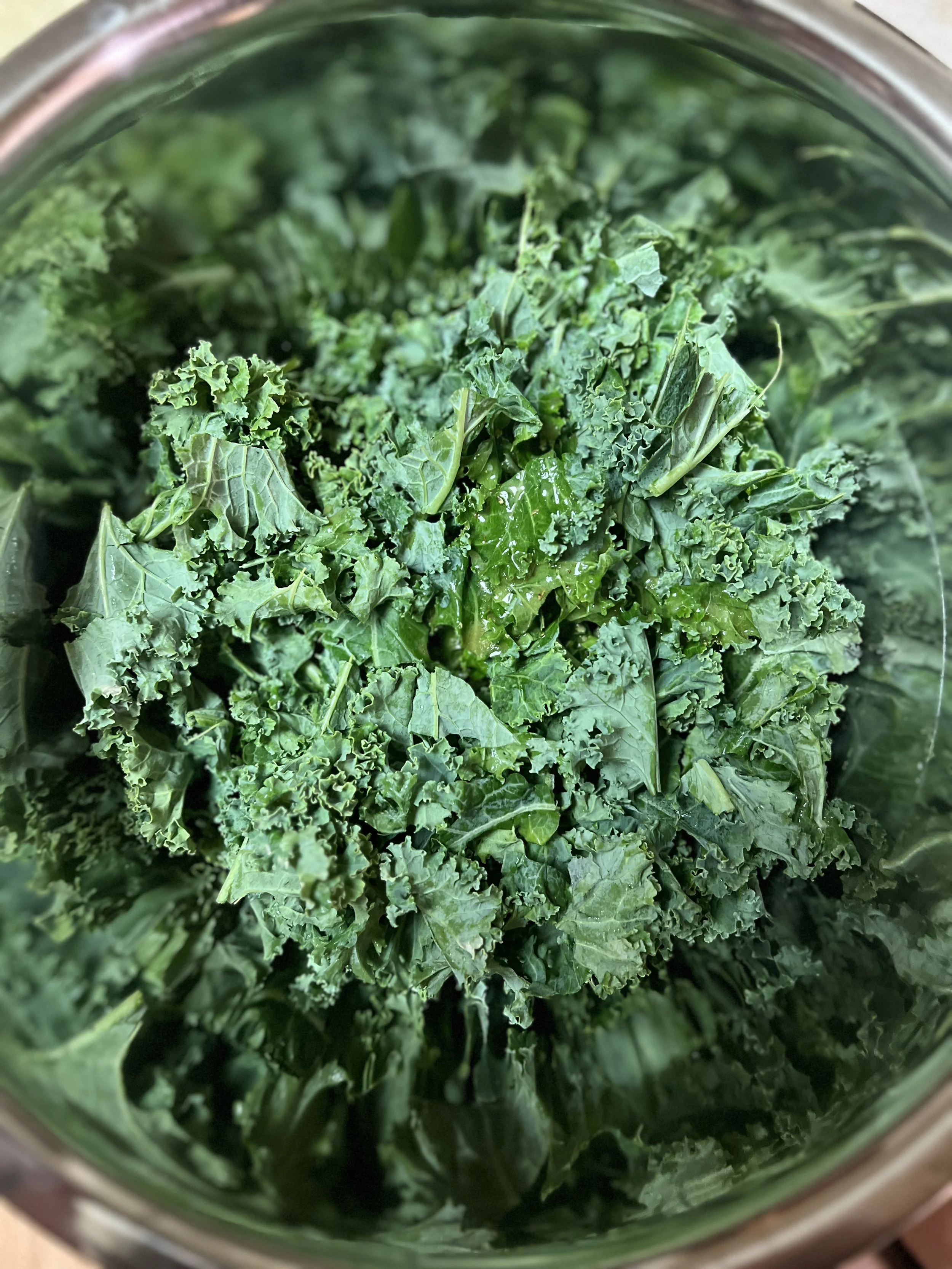
Wash, chop, and massage your kale right before you’re about to use it. Measure with your heart and drizzle on a glug of olive oil, lemon juice, and some salt to help break it down.
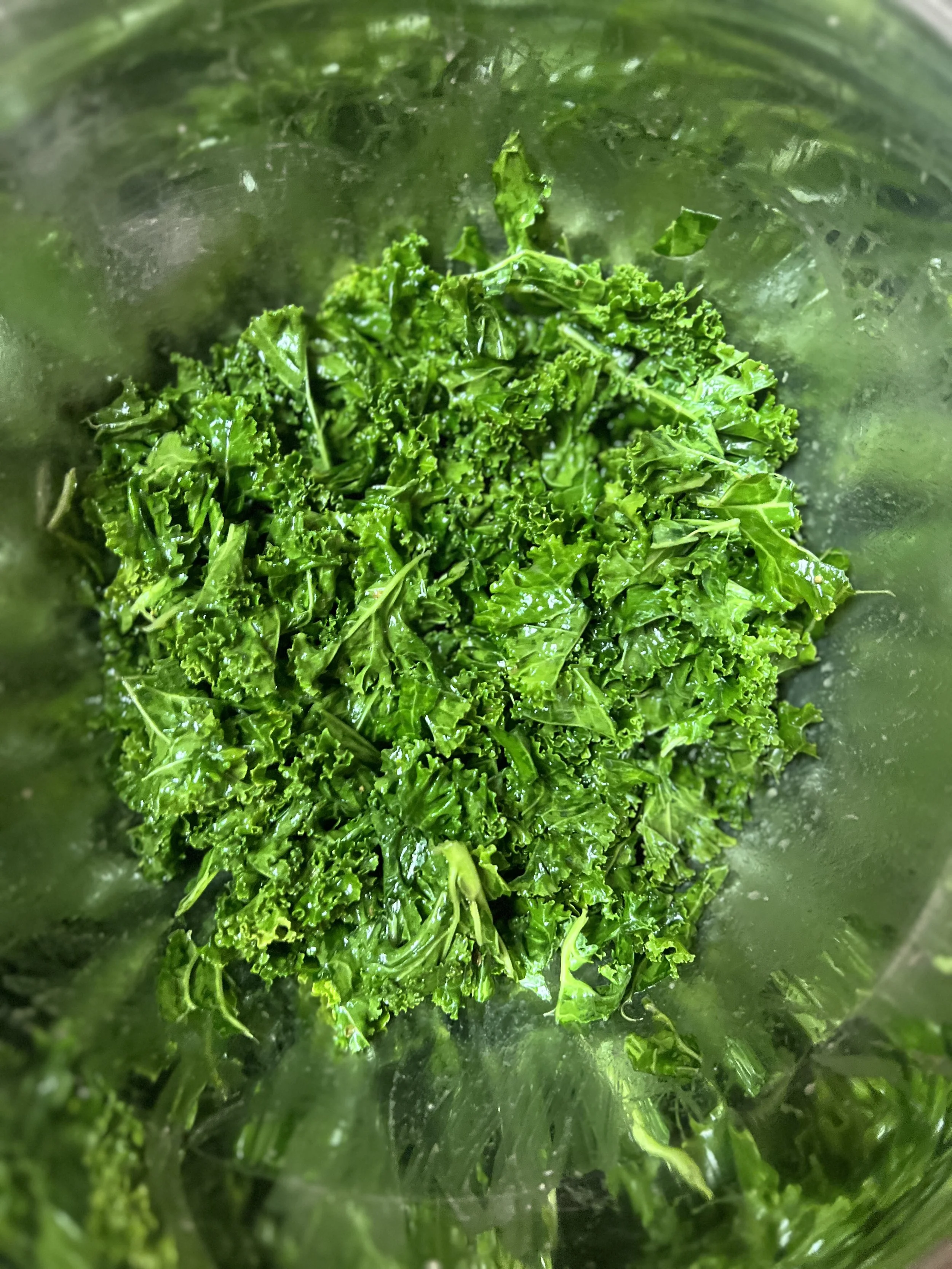
Stop massaging your kale once it’s all bright-green, the texture is slightly more leathery, and the volume has reduced by about half, but there’s still plenty of texture—no mush.
How do you know when it's done?
You'll see it before you feel it. Here's what to look for:
The color deepens. Raw kale is a muted, slightly dusty green. Massaged kale turns a rich, vibrant, jewel-toned green. This is your best signal.
The volume shrinks. Kale loses a lot of its bulk. You might start with a bunch that fills your whole bowl and end up with roughly half as much. This is actually one of the best parts: that enormous bunch of kale suddenly feels completely manageable, and you're eating a lot more of it without realizing it.
The texture changes. The leaves go from stiff and springy to soft and pliable. If you grab a piece, it should bend without resistance rather than snapping back.
It feels slightly damp. Some moisture will release from the leaves. That's exactly what's supposed to happen.
For most kale, this takes around two minutes, but let those cues be your guide. Lacinato may be ready sooner. Older or thicker curly kale may need a little longer.
Massaging kale helps with digestion, too
Raw kale is tough on your gut, not in a dangerous way, just in a this takes work way. The leaves are high in insoluble fiber and have thick cell walls made mostly of cellulose. Your body can't break down cellulose on its own, so the more you break it down mechanically, the easier the job is for your digestive system.
Massaging basically pre-digests the kale a little. You're doing some of the physical work your stomach would otherwise have to do. That's why massaged kale tends to sit better than raw kale for people who normally find it hard on their stomachs.
Looking for a great recipe to try this on first? Start with the Creamy Kale Caesar with Chickpeas. It’s the perfect place to put this technique to work.
